


Dishwashers
-
Miele 60cm Fully Integrated Dishwasher -
Miele 60cm Semi-Integrated Dishwasher - Clean Steel 

Miele 60cm Semi-Integrated Dishwasher - Clean Steel
Miele 60cm Semi-Integrated Dishwasher - Clean Steel
G5210SCICLST -
Miele 60cm Built - Under Dishwasher - Clean Steel 
Miele 60cm Built - Under Dishwasher - Clean Steel
Miele 60cm Built - Under Dishwasher - Clean Steel
G5210SCUCLST -
Miele 60cm Semi Integrated Dishwasher - Clean Steel 
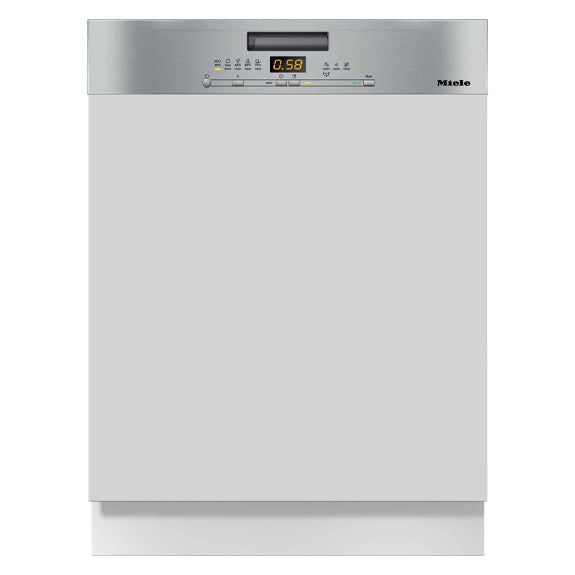
Miele 60cm Semi Integrated Dishwasher - Clean Steel
Miele 60cm Semi Integrated Dishwasher - Clean Steel
G5000SCICLST -
Miele 60cm Built - Under Dishwasher - Clean Steel 
Miele 60cm Built - Under Dishwasher - Clean Steel
Miele 60cm Built - Under Dishwasher - Clean Steel
G5000SCUCLST -
Miele 60cm Built - Under Dishwasher - Brilliant White 
Miele 60cm Built - Under Dishwasher - Brilliant White
-
Miele 60cm Freestanding Dishwasher - Clean Steel 
Miele 60cm Freestanding Dishwasher - Clean Steel
Miele 60cm Freestanding Dishwasher - Clean Steel
G5000SCCLST -
Miele 45cm Fully Integrated Dishwasher -
Miele 60cm Freestanding Dishwasher - Clean Steel 
Miele 60cm Freestanding Dishwasher - Clean Steel
Miele 60cm Freestanding Dishwasher - Clean Steel
G5210SCCLST


Frequently Asked Questions
How Long Should a Dishwasher Last?
Many dishwashers, on average, feature a 10-year life expectancy. Dishwashers used daily will start to show signs of ageing around the five-year mark, so it’s worth investing in careful cleaning and maintenance.
Tip: Observe the dishwasher’s warranty to enjoy greater peace of mind, most dishwashers feature a warranty period of 2 to 5 years. The longer the warranty, the longer you can use the dishwasher with peace of mind.
Are Dishwashers Hygienic?
Compared to hand-washing, dishwashers are much more hygienic as they wash with high temperatures and hot water wash cycles. With the ability to effectively dissolve detergent, washing with a dishwasher will ensure greater peace of mind, especially when cleaning jars, sterilising baby bottles, and removing germs and bacteria from dishes.
How Do I Choose an Efficient Dishwasher?
Dishwashers are tested for energy and water efficiency before receiving a rating. An Energy Rating rates the energy efficiency, and a WELS rating indicates the water efficiency of a dishwasher. As a guide, the higher the Energy and WELS rating, the greater the efficiency of the dishwasher. When purchasing a dishwasher, opt for one with an Energy and WELS rating of 3.5-Star and above, with an easily accessible filter to help ensure routine maintenance.
How to use a Dishwasher Efficiently?
There are some easy ways to ensure effective and efficient use of your dishwasher, including running the dishwasher only when there’s a full load, selecting lower temperatures and shorter cycles and when possible, running the ‘eco’ or ‘energy saving’ mode. If the dishwasher allows, instead of running the drying cycle, let the dishes dry naturally. Consider running your dishwasher during off-peak periods, like late at night, to save on energy costs.
How do I install an inlet and drain hose for your dishwasher?
- Make sure the dishwasher is switched off and disconnected from the power before installation.
- Ensure that the dishwasher is close to a water tap and drain.
- Installing the inlet: Thread the dishwasher’s hose through the cabinet’s cut out, checking that there’s no twists or bends.
- Connect and secure the water supply inlet hose to the water inlet tap. Then turn on the tap and check for leaks.
- To install the drainage hose, install it into a sink drainpipe branch. Note: the branch should be above the trap so that the bend is at least 50mm above the floor.
- Use the dishwasher’s supplied drain hose and ensure that there are no twists.
- Push the drain hose onto the spigot and secure it with a clamp. If the drain is new, drill out the drain spigot.
- Both the inlet and drain hose is now connected, and your dishwasher is ready to use!
Recently Viewed
No recently viewed products yet.
Others Bought
No others bought products yet.